Services
The work, done on your events
Each service starts on something that already happens — a circular, a renewal, a review date — and ends in an artefact a named person signs. Every run adds to the same rule set.
Regulatory reporting
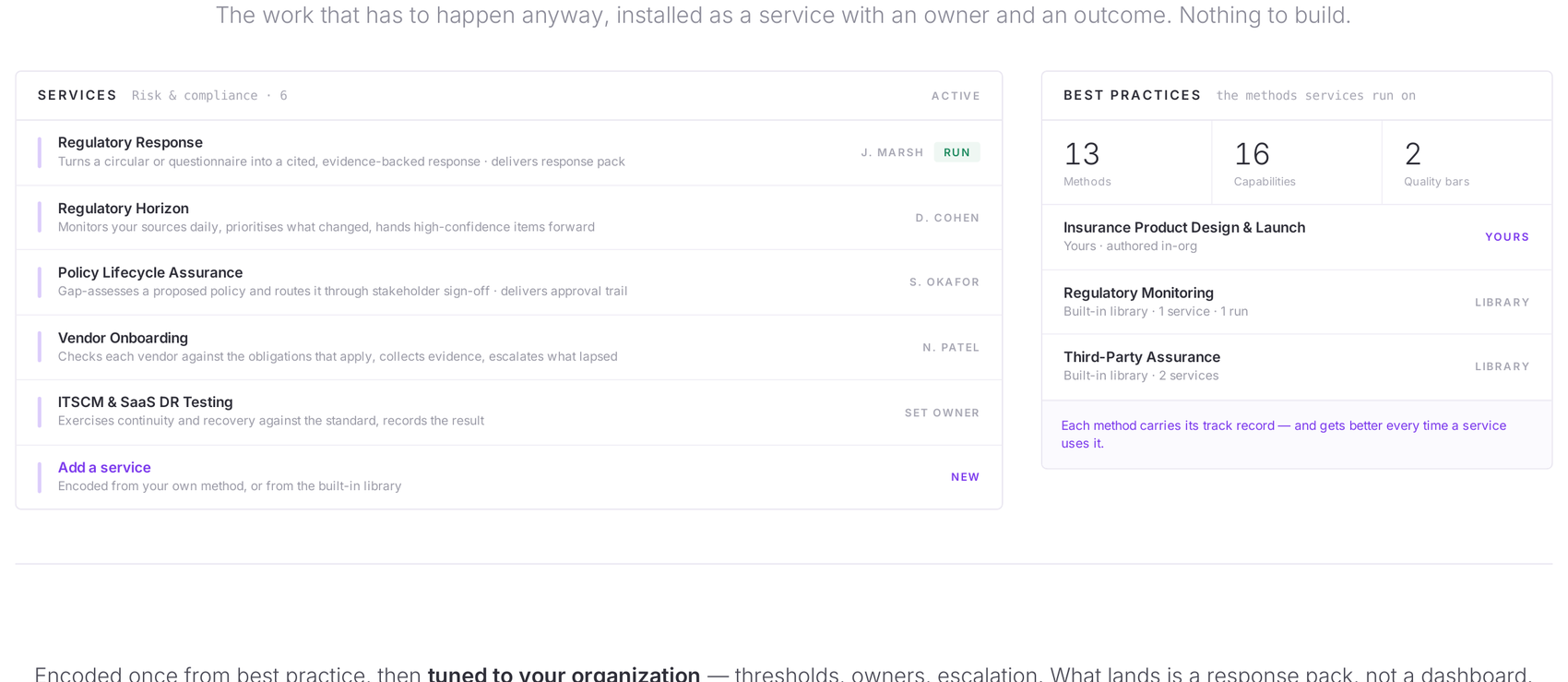
Regulatory Response
Tredy reads the source against your policy set, maps the obligations that apply, cites the controls that satisfy them, and names the gaps that don't. A named owner signs it.
Delivers: A response packRegulatory change management
Regulatory Horizon
Horizon scanning fails on volume, not on access. Tredy watches your named sources, detects what actually changed against the last version, and scores it against the obligations you already carry.
Delivers: A ranked change listPolicy management
Policy Lifecycle Assurance
Tredy gap-assesses the draft against the obligations in force, works out who must review it, routes it to each of them, and keeps every decision and its rationale attached to the version it was made against.
Delivers: An approval trailThird-party risk management
Vendor Onboarding
Not a questionnaire that ages. Tredy works out which obligations apply to this vendor, requests the evidence, checks what came back against the rule, and escalates anything that lapses.
Delivers: An evidence file per vendorOperational resilience testing
ITSCM & SaaS DR Testing
Continuity and recovery testing against the standard that applies, with what recovered, how long it took, and what fell outside tolerance recorded honestly.
Delivers: A tested recovery recordBuilt from your method
Your own service
Most regulated work is already written down somewhere. Tredy encodes it as a service, sets the thresholds, owners and escalation paths to yours, and runs it on the events you name.
Delivers: Whatever your method definesStart with one service.
A 30-minute scoping session with your risk owner and your IT contact. We leave with the first service named, the connections listed, and a date.